
Criminal Cases in Habersham County Courts
Habersham County Superior Court, part of the Mountain Judicial Circuit, tries felony cases. State Court generally hears misdemeanors and traffic cases. Magistrate Court handles warrants, first appearances, committal matters, and certain bonds, but it does not conduct felony trials. A city municipal court keeps its own ordinance, traffic, and authorized misdemeanor docket. Juvenile files follow separate access rules and should not be treated as open adult criminal case records.
The Clerk of Superior and Juvenile Courts is the authoritative custodian for a Habersham County felony file. The counter is at 295 Llewellyn Street, Suite 110, Clarkesville, Georgia 30523, and the Superior Court number is 706-839-0300. State Court can be reached at 706-778-0800, Magistrate at 706-839-0350, and Probate at 706-839-0320. Give the exact case number when possible. Otherwise, provide the name and an approximate filing or arrest date.
Four Habersham Courts, Four Roles
Picking the wrong court is the most common reason a local search stalls. The initial warrant may appear through Magistrate, the prosecutor may later file a felony in Superior Court, and a city citation can remain in municipal court. The filed charge controls where the prosecution proceeds, not merely the arresting agency.
| Court | Criminal role | Best record request |
|---|---|---|
| Superior | Felonies and related post-judgment filings | Complete docket or certified disposition |
| State | Misdemeanors and traffic | Case number, filings, judgment |
| Magistrate | Warrants, first appearances, bonds | Issuance or committal record |
| Municipal | City ordinances and allowed traffic or misdemeanor matters | City clerk docket and judgment |
A Georgia Felon Search result is not a substitute for any of these court files. It is a name-based state product with narrower felony-conviction coverage, while the local docket preserves pleadings and the exact case path.
How to Search Case Records
Begin with the court most likely to hold the filed charge. Georgia Courts E-Access is a directory to participating providers, not one complete statewide docket. Provider accounts are required, coverage varies, and an older or unavailable document still requires clerk contact.
- Identify the likely court from the charge level and issuing agency.
- Search with the case number, or give the party name and approximate year.
- Review the docket for the accusation or indictment and later entries.
- Compare hearing dates with the Mountain Circuit calendars.
- Ask the proper clerk for copies or a certified final disposition.
| Search item | Type | Required | Practical use |
|---|---|---|---|
| Provider account | Login | Yes online | Opens the selected E-Access provider |
| Party name | Text | Varies | Finds possible matching cases |
| Case number | Text | No | Best exact local identifier |
| Filing year | Date filter | No | Narrows common-name results |
| Court or case type | Selection | Varies | Limits results to the right docket |
Habersham E-Filing Is Not Free Access
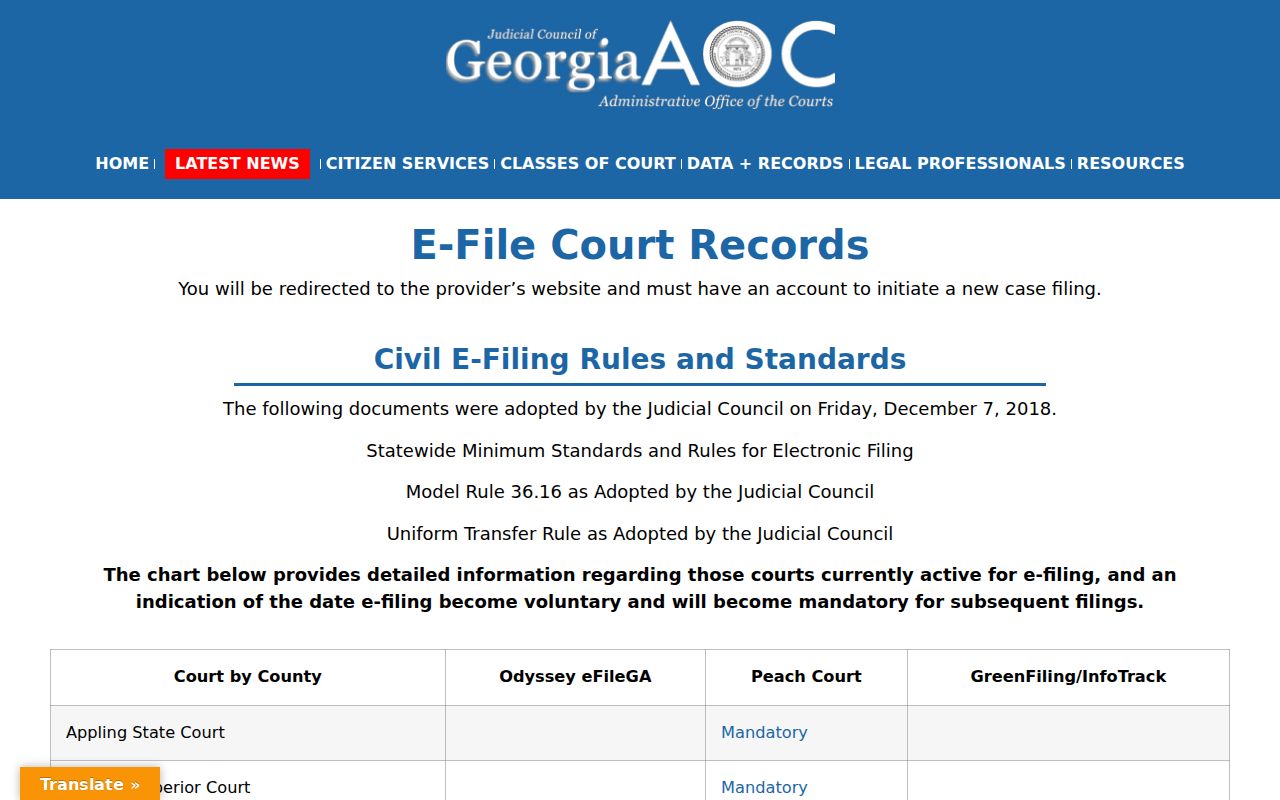
Habersham Superior and State Courts appear on Georgia's mandatory e-filing table. That fact describes how filings enter the court system. It does not promise that every pleading is free for public viewing or that every historic paper file has been scanned.
The official Georgia e-filing table shows the county's participation.
Use online access to locate the docket, then ask the clerk what is available at the counter and what can be certified. No dependable local copy or certification fee was found in the research, so request the current amount before ordering.
Note: Mandatory electronic filing does not make every Habersham County criminal case document a free public download.
What the Case File Shows
A court file centers on one prosecution. It may show the State and defendant, judge, filed charge, motions, hearing entries, plea or verdict, judgment, sentence, financial obligations, and appeal activity. The certified disposition is the strongest proof of that case's final result.
| Case number and court | Identifies the docket and the clerk that holds it. |
|---|---|
| Charging document | An accusation or indictment states charges actually filed. |
| Docket entries | Chronological filings, notices, hearings, and orders. |
| Plea or verdict | Shows how each filed count was resolved. |
| Disposition and judgment | Records conviction, dismissal, acquittal, nolle prosequi, or another outcome. |
| Sentence and conditions | States custody, probation, fines, and court-ordered terms when public. |
Intake charges may differ from this file. Prosecutors can decline, amend, or replace arrest charges. For the earlier event and custody details, use the county's Habersham County arrest history channels, then return to the clerk for the filed outcome.
Habersham Accusations and Indictments
An accusation is a charging paper filed by a prosecutor. An indictment, sometimes called a true bill, is returned by a grand jury. A no bill means the grand jury did not return the proposed charge. Grand-jury deliberations are secret, though a filed indictment in an adult public case is ordinarily part of the case file unless sealed.
- Arraignment
- The hearing where the defendant receives the filed charge and enters a plea.
- Nolle prosequi
- A formal decision by the prosecutor not to continue a charge.
- Dead docket
- A case placed in inactive status rather than finally tried or dismissed.
- First Offender
- Georgia treatment that may lead to discharge and exoneration after successful completion for an eligible person.
Those terms matter because a bare name result can hide the difference between an arrest, an active prosecution, and a final judgment. Read each count and its disposition.
Stages of a Criminal Case
The court record begins to take shape after the arrest and booking stage. Magistrate functions can come first, followed by a prosecutorial charging choice. A felony may proceed by accusation where allowed or by grand-jury indictment. Motions and calendar entries then lead toward a plea or trial.
Case flow: Charges Filed › Arraignment › Pretrial › Plea or Trial › Disposition › Sentencing
Later appeal or post-judgment filings remain tied to the case number. Courts and prosecutors also transmit disposition data to the Georgia Crime Information Center. That transmission can lag or fail to link, so the local certified disposition should be used to support a correction when GCIC lacks the outcome.
Missing Habersham Disposition at GCIC
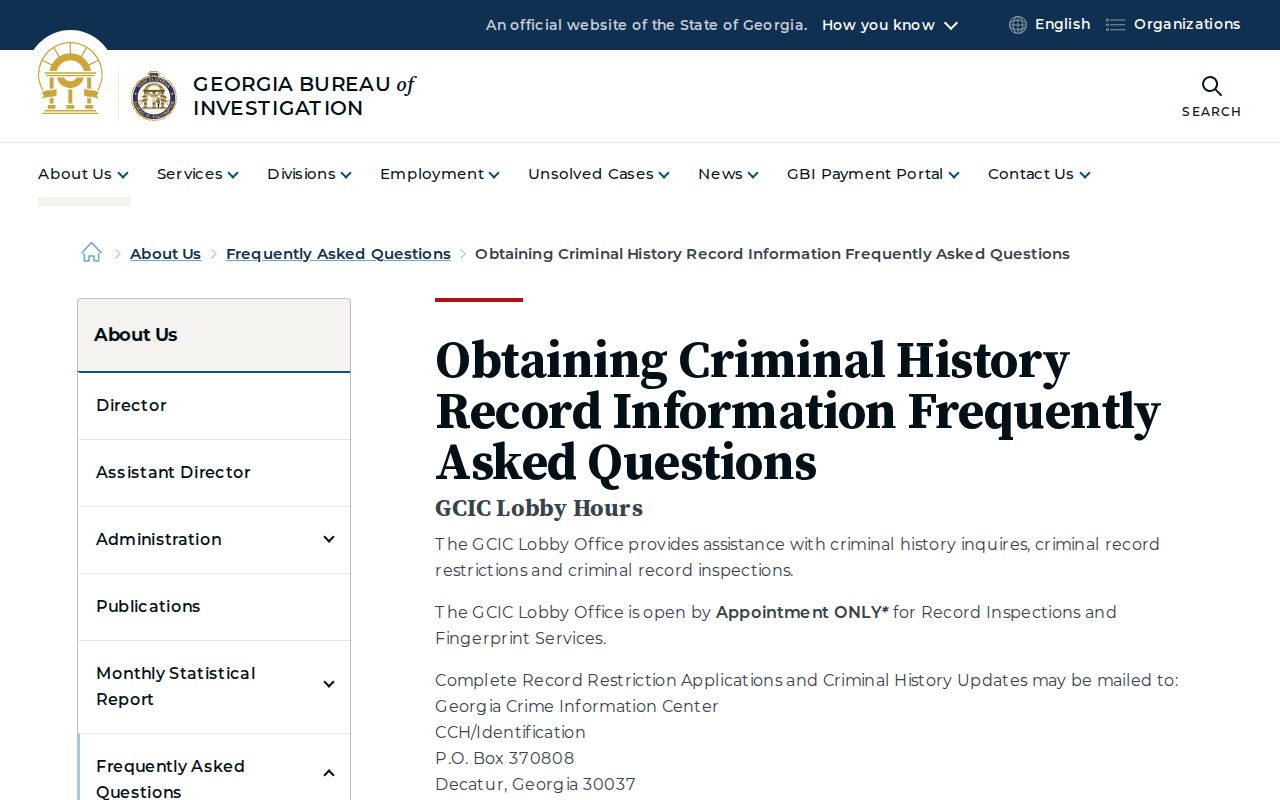
When a statewide history omits a final outcome, obtain the Habersham County clerk's certified disposition first. GCIC asks for enough identity data to locate the arrest cycle, such as full name, date of birth, race, sex, and arrest date, or a SID with arrest date, or the Offender Tracking Number. The request must state the change sought and include source proof.
The GBI criminal-history guidance explains the fields, self-review, and correction path.
GCIC does not invent a missing judgment. It updates data when the source court or agency authorizes and documents the correction.
Mountain Circuit Accountability Entries
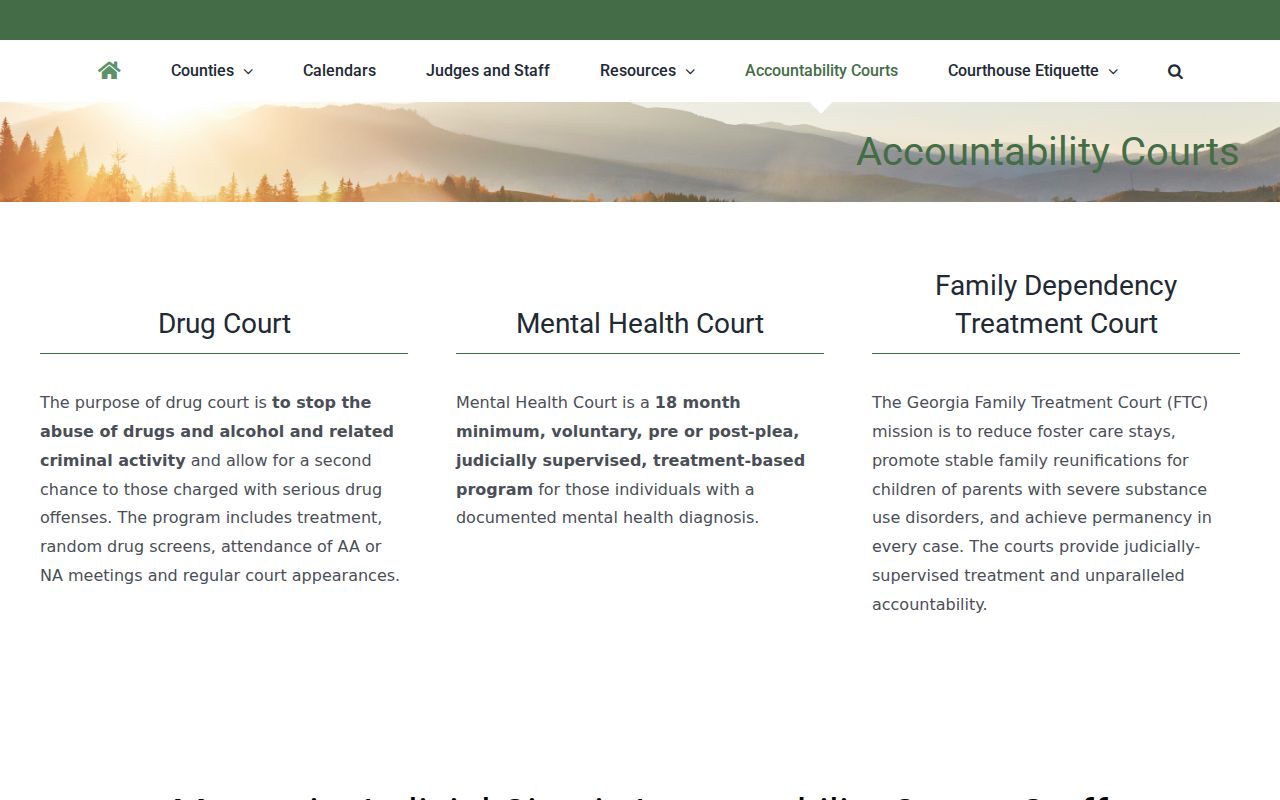
The Mountain Judicial Circuit operates Drug Court, Mental Health Court, Family Treatment Court, and a Daily Reporting Center. A participant's public docket may contain distinctive calendar entries and orders connected to one of these programs, while clinical or treatment details can remain confidential.
The Mountain Circuit accountability-court page identifies the programs and staff.
A docket entry should be read with the operative order, not treated as a full account of private treatment. The named circuit judges and staff are also published by the Mountain Circuit.
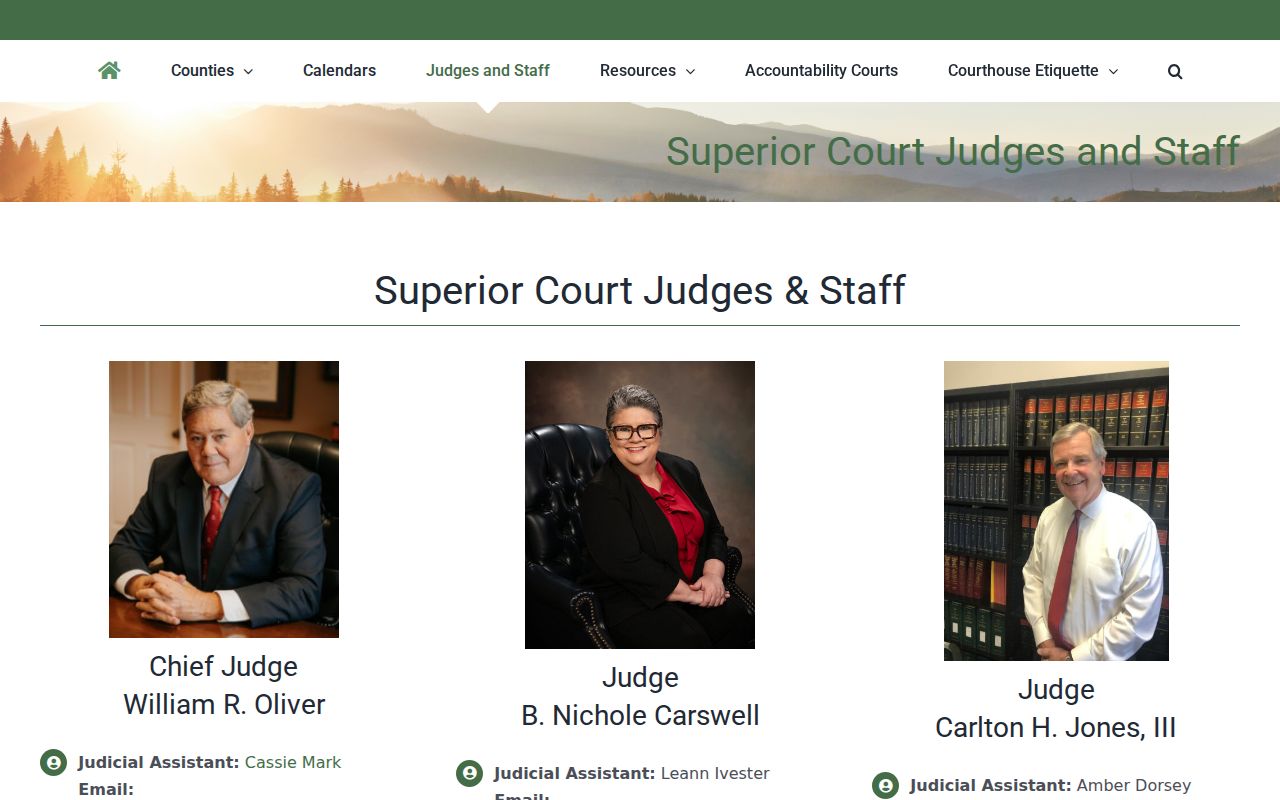
Court assignments can change, so verify the current calendar before a visit. Program participation does not make private clinical facts public.
Access and Restrictions
Georgia starts from public access to court records, but not every part of every file is open. Juvenile matters, protected identifiers, sealed material, and information covered by a specific exemption require different handling. Uniform Superior Court Rule 21 permits a tailored access limit when privacy harm clearly outweighs public interest. An order must state its scope, nature, duration, and reason.
The Georgia Attorney General's open-record guidance explains that agencies need not create a record that does not exist. HCSO also warns that material in a pending criminal case may involve discovery rights rather than a routine sheriff request. A party should not treat public access and litigation discovery as the same process.
The GBI restriction process addresses dissemination of eligible arrest cycles, while court sealing is separate.
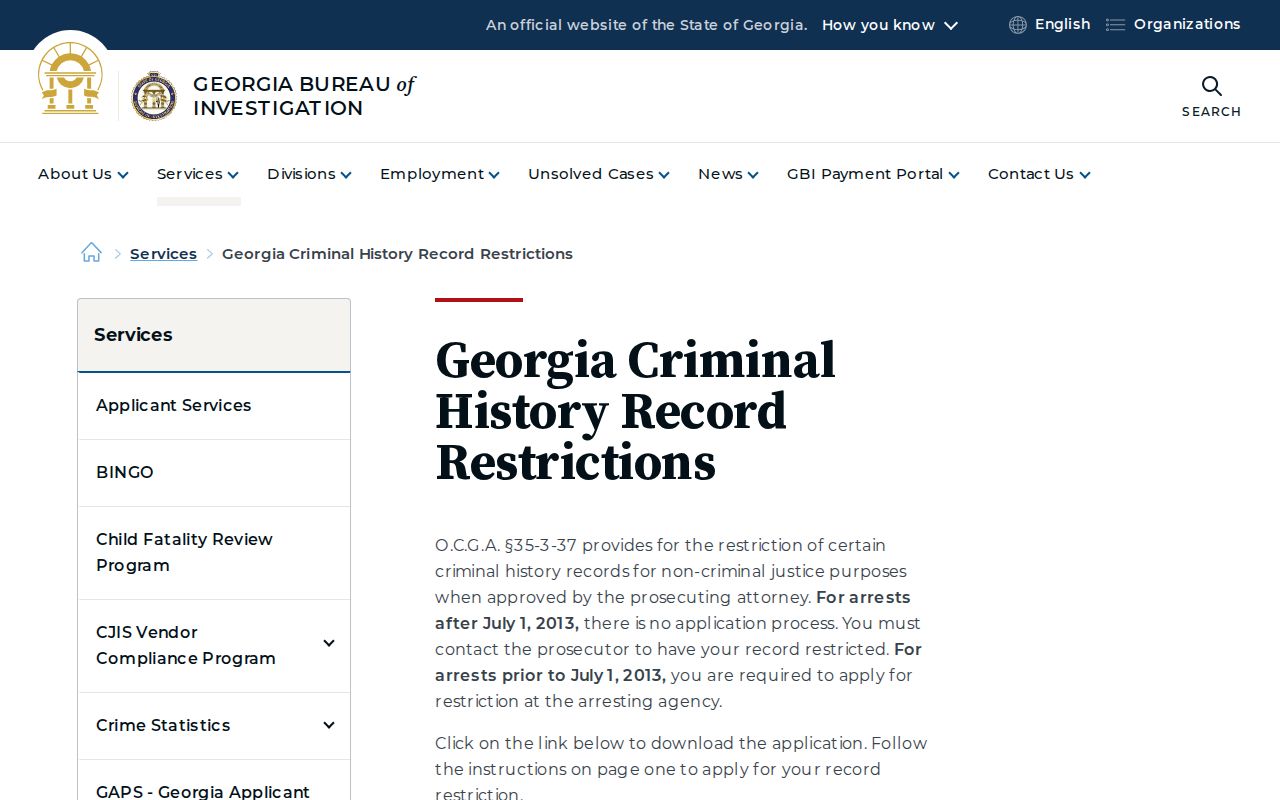
Restriction does not mean every source document was destroyed. Ask the clerk whether a missing case is sealed, restricted from the view being used, archived, or held by another court.
Certified Habersham Disposition
For proof of one prosecution's outcome, request a certified disposition from the correct clerk at 295 Llewellyn Street rather than relying on a name-based portal result. Confirm the case number, defendant name, court, and count before ordering. Ask about the current copy and certification charge because no verified local schedule was found.
The official Mountain Circuit county page confirms the Habersham clerk's location and contact route.
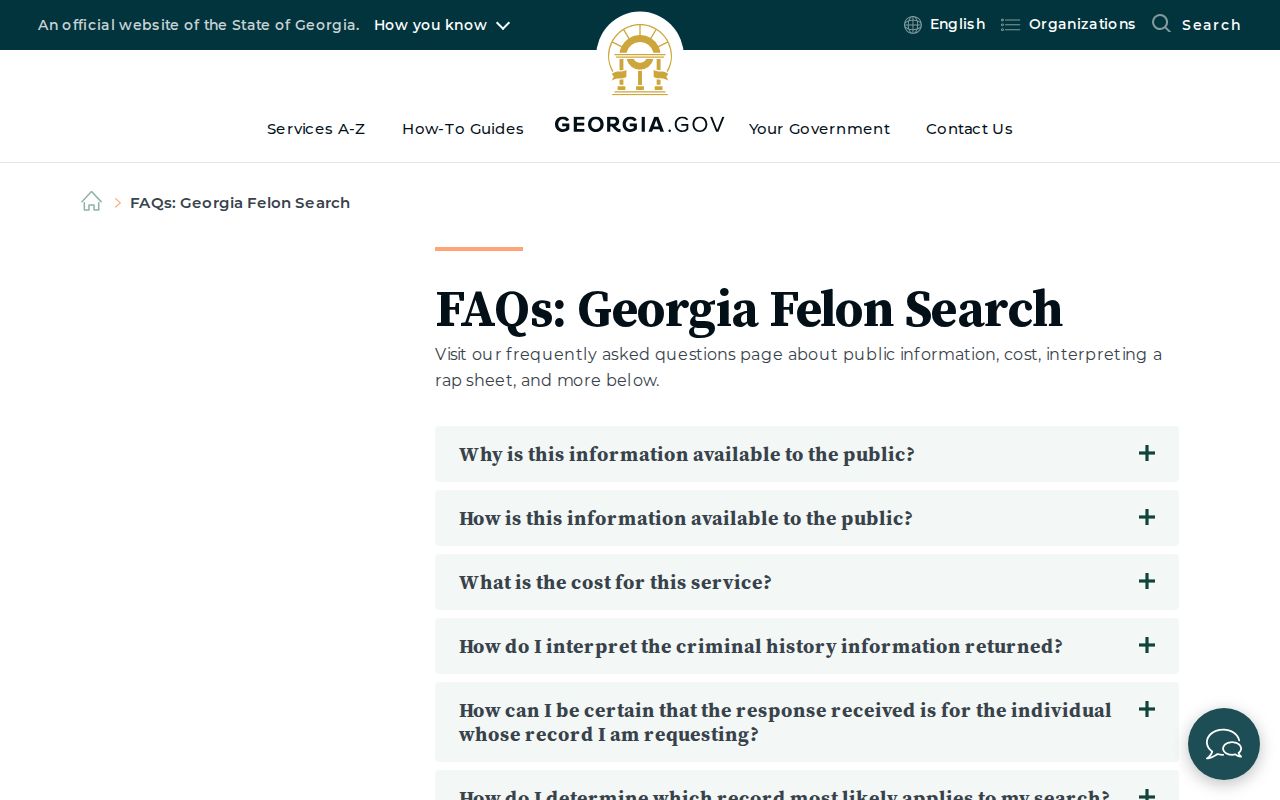
A Georgia Felon Search transaction may help identify a possible statewide felony conviction, but it cannot supply the pleadings, docket, or certified judgment held by the Habersham County court.